Fractional AI leadership
Fractional Chief AI Officer
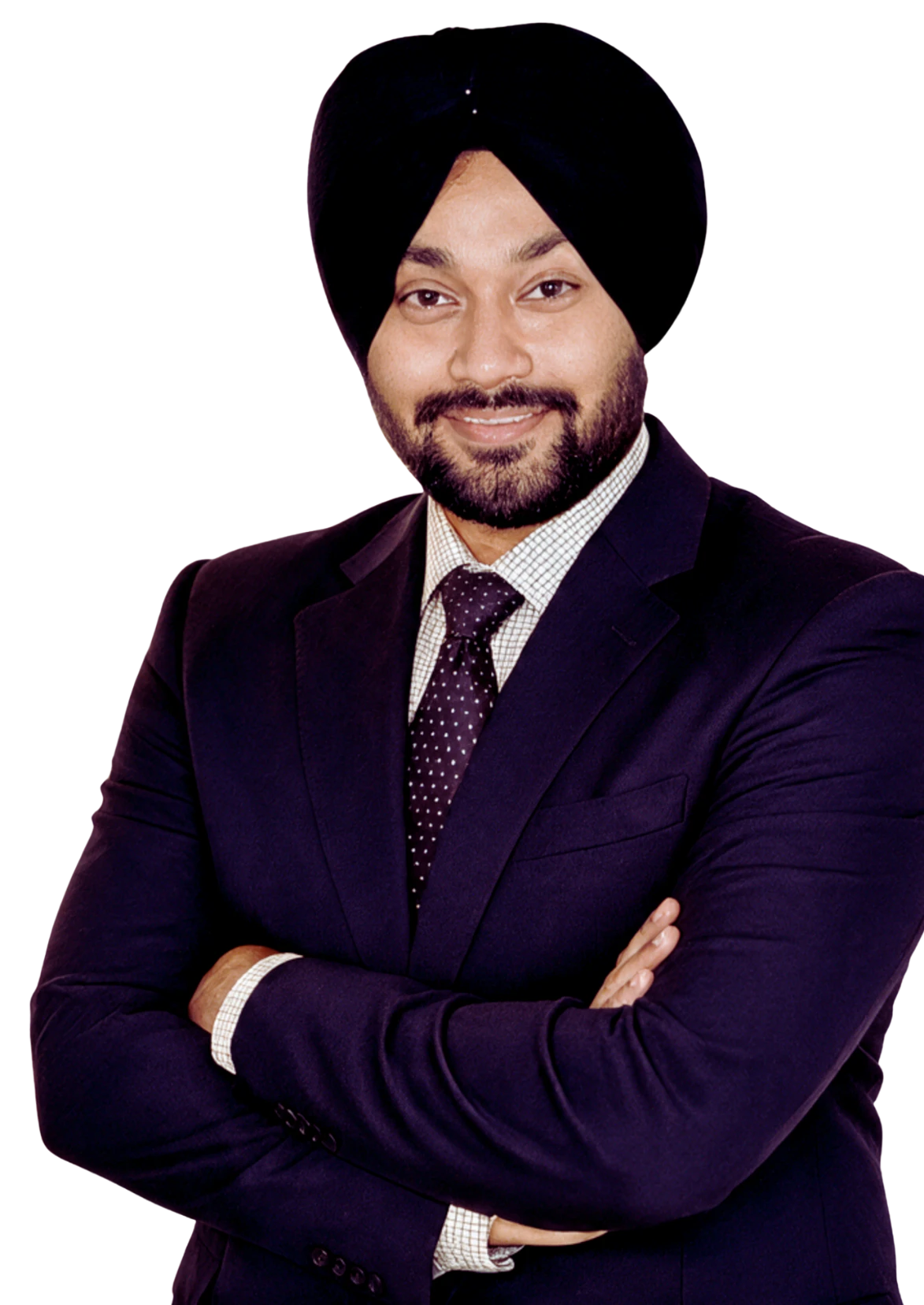 By Rickey Singh, AI transformation strategist. 20+ years helping businesses grow through technology.
A fractional Chief AI Officer is a senior executive who owns your AI strategy part-time. They decide where AI should earn money in the business, set the rules for using it safely, and make sure the work actually ships, for a fraction of the cost of a full-time hire.
The short answer
A fractional Chief AI Officer (fractional CAIO) gives a business between roughly $5 million and $100 million in revenue the same AI leadership a large company buys full-time, for a few days a month. You get one accountable owner for AI: someone who picks the opportunities with the best return, turns them into a roadmap, keeps the risks in check, and reports progress to the leadership team in plain language.
It suits companies that know AI matters, have tried a few tools, and still have no one whose job it is to make AI pay back.
What a fractional Chief AI Officer actually does
The job is leadership, not tooling. In a typical month they will:
- Own the AI roadmap. Rank the opportunities by return and effort, decide what gets built first, and stop the projects that will not pay back.
- Turn experiments into operations. Move AI out of individual chat subscriptions and into the workflows where the money is: sales follow-up, customer service, content, reporting and operations.
- Set the guardrails. Decide which data AI may touch, where a human must approve, and how accuracy is checked, so the business is protected without slowing down.
- Choose vendors and stay independent. Pick tools and models on merit and avoid lock-in to any one platform.
- Build the team's skills. Train the people who will run the new workflows, so the capability stays when the engagement ends.
- Report to the leadership team. Show what was spent, what shipped and what it returned, in numbers the board recognises.
Fractional CAIO, full-time hire, consultant or fractional CTO?
| Option | What you get | Typical commitment | Best when |
|---|---|---|---|
| Fractional Chief AI Officer | One senior owner for AI strategy and delivery | A few days a month, month to month | You need direction and accountability, not a permanent department |
| Full-time Chief AI Officer | A permanent executive and, usually, a team | Full salary and equity | AI is core to the product and already at scale |
| AI consultant or agency | A defined project, delivered and handed over | Fixed scope | You already know exactly what to build |
| Fractional CTO | Leadership of engineering and technology overall | A few days a week | The main gap is software delivery rather than AI |
The difference that matters most is ownership. A consultant delivers a project and leaves. A fractional Chief AI Officer stays accountable for the result and changes course when the numbers say so.
When a business needs a fractional Chief AI Officer
Most companies are still experimenting. McKinsey's State of AI research found that nearly two-thirds of organisations have not moved beyond experimenting and piloting (summarised by Axial Search). These are the signs that it is time to put someone in charge:
- No one owns AI. Several people are trying tools, and nobody is accountable for the outcome.
- Pilots never reach operations. Demos impress, but nothing has changed how the business runs or what it earns.
- The board is asking. Investors or the owners want an AI plan, and the honest answer is that there is not one.
- Risk is invisible. Staff paste customer data into AI tools and nobody has set the rules.
- Hiring is not realistic yet. The business cannot justify a full-time executive salary, and should not hire one before it knows what the role must deliver.
What a fractional Chief AI Officer costs
Market rates vary with seniority and time committed. A detailed 2026 breakdown puts UK retainers at £3,000 to £15,000 a month depending on days and scope, with US retainers typically 30 to 50 percent higher, against $250,000 to $450,000 a year in salary alone for a full-time C-suite AI role at a mid-sized US company (Lilach Bullock).
The cheaper way to find out whether you need one is to start small. With Rickey, the first step is a one-hour Private Executive Consultation for $250. You leave it knowing where AI would return the most in your business and whether ongoing fractional leadership makes sense. Any longer engagement is scoped after that call, around what the business needs.
The first 90 days with a fractional Chief AI Officer
Days 1 to 7: find the money. Interviews with leadership, a review of the numbers and the current tools, and a ranked list of AI opportunities. Rickey's offer is built around this week: give me 7 days and I'll show you what AI can do for your business.
Days 8 to 30: ship the first win. The highest-return opportunity goes into production inside the tools the team already uses, with a measure agreed up front.
Days 31 to 90: build the system. A 12-month roadmap, the guardrails, the vendor choices and the training, so each new AI workflow is cheaper and faster to launch than the last.
How to choose a fractional Chief AI Officer
- Business results over model knowledge. Ask what changed in revenue, margin or hours saved, not which models they have used.
- Senior operating experience. The role sits in the leadership team; it needs someone who has run strategy, technology and growth before.
- Hands-on enough to ship. A roadmap with nothing running at day 30 is a warning sign.
- Independence. Be wary of anyone who earns from the tools they recommend.
- Limited client load. Real ownership needs attention. Rickey works with two to three businesses at a time, by design.
Why work with Rickey Singh
Rickey has spent more than 20 years helping startups and global brands, including BMW, Domino's, GAP and Campa, grow through strategy, technology and now AI. You work with him directly, not an account team, and engagements run remotely across the United States and Australia. See the selected work for case studies.
Frequently asked questions
Is a fractional Chief AI Officer the same as an AI consultant? No. A consultant delivers a defined project. A fractional Chief AI Officer owns AI for the business on an ongoing basis: strategy, priorities, guardrails and results.
How much time does a fractional CAIO spend with the business? Usually a few days a month, sometimes more in the first 90 days while the roadmap and first projects are set up.
Does a small business need a Chief AI Officer at all? Not full-time. A business with 20 to 200 people rarely needs a permanent AI executive, but it does need someone accountable for where AI earns money. That is what the fractional model is for.
What is the difference between a fractional Chief AI Officer and a fractional CTO? A fractional CTO leads engineering and technology as a whole. A fractional Chief AI Officer focuses on where AI creates value across the business, including sales, service and operations, not only the tech team.
How do I start? Apply for a one-hour Private Executive Consultation ($250). If ongoing fractional AI leadership is the right fit, it is scoped from there.